"The world keeps ending," the poet Franny Choi tells us, "and the world goes on."

From the biblical book of Revelation to popular speculative fiction, narratives of the apocalypse have long commanded our attention. Meanwhile, a growing body of scholarship on the concept of "apocalypse" interrogates real-world cataclysms both historical and contemporary, including settler colonialism and environmental disaster. With a focus on multiethnic American literature, this course examines how writers have reiminaged religion to interrogate varied apocalypses and their aftermaths.
We will ask the following:
What endings have we already imagined, engineered, or endured?
How do the intersections of race and religion shape what constitutes an apocalypse--or what it means to survive?
And what does it mean for the world to go on? To live, believe, and hope in precarious times?
This course will discuss fascinating and thoughtful works of literature that speak to our contemporary concerns: the course line-up includes fiction by authors like Octavia Butler, Ling Ma, and Cherie Dimaline. Students will also have opportunities to try out creative writing as one avenue for thinking critically about the category of the (post)apocalyptic—and as a way to reflect on the value of making art when the world feels like it's on fire.
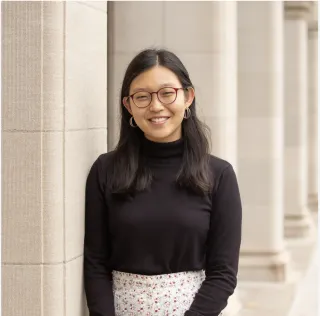
Naomi Kim's research focuses on the interplay between race, religion, and reading practices in Asian American literature, and her dissertation examines how these factors come to bear on the complex politics of Asian American writing. She is currently a fifth-year PhD candidate in the English department and a Lynne Cooper Harvey Fellow in American Culture Studies.